

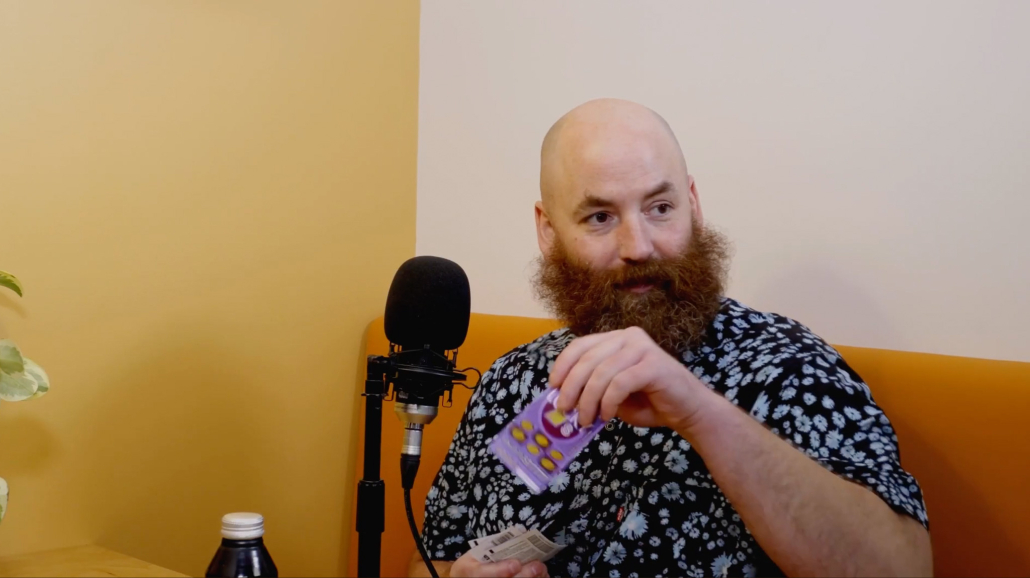
Podcast: Here’s to the crazy ones with Jeph Maystruck
A big thanks to Nikhil Kumar from the Finding Purpose Podcast for the interview!
Find the Spotify link here: Here’s to the crazy ones with Jeph Maystruck
Keep Going: The Messy Truth About Building a Business That Matters
There’s a polished version of entrepreneurship people like to talk about.
You have a great idea. You take a courageous leap. You work hard, build a company, and eventually become an “overnight success.”
That wasn’t my experience.
At one point in StratLab’s early years, I was carrying somewhere between $40,000 and $50,000 in debt. Then my tax bill arrived.
It was another $10,000 I didn’t have.
That was it. I was ready to declare bankruptcy, find another job, and move on with my life. I told my business partner, Brandon, that I couldn’t keep going.
The next day, he showed up at my apartment with a cheque for $10,000.
“We’re not giving up this soon,” he told me. “Go pay it off.”
That moment has never left me.
It wasn’t only about the money. Brandon believed there was something worth saving—even when I wasn’t sure I did. He believed in the company, in our partnership, and in the possibility of what we were building.
Today, people see StratLab and assume there must have been a brilliant plan behind it.
There wasn’t.
There was curiosity, stubbornness, a lot of bad ideas, several maxed-out credit cards, and a refusal to stop.
Nobody Is Jealous of How You Got It
People can be jealous of what you have, but they’re rarely jealous of how you got it.
They see the company, the clients, the team, the presentations, and the projects. They don’t see the years when nobody was lining up to hire us.
They don’t see the trips and weddings you missed because you couldn’t afford to go. They don’t see you collecting recycling from the office so you can take it to SARCAN and make a payment the following week. They don’t see the nights when your entire business strategy is to believe tomorrow will somehow be better.
We didn’t start StratLab because we had identified a safe and lucrative opportunity. We started a company focused on social media and the internet when plenty of people still weren’t convinced either had much business value.
I remember explaining our idea to someone who looked at me and asked, “Is there money in that?”
Fair question.
At the time, the honest answer was: not yet.
But we believed the world was changing. If we kept building, writing, learning, and forming relationships, eventually the world would arrive where we already were.
So we kept going.
Learn First. Let the Money Follow.
In the beginning, we worked with nearly anyone willing to spend time with us.
One of our early projects involved helping the Regina Police Service rethink its mission, vision, and values. The project didn’t make us rich, but it gave me the opportunity to interview people throughout the organization and learn how a complex public institution worked.
That experience was worth more than the invoice.
Young professionals are often encouraged to chase the highest-paying opportunity. I think there’s a better question:
What opportunity will help you build the most valuable skills?
You can make money later. You may not get another chance to sit across from someone fascinating, work on a problem beyond your current abilities, or learn something that changes the direction of your career.
Our rule became simple: learn something or build a relationship.
Preferably both.
Those relationships compound. Someone we helped five or ten years ago comes back because they remember how we treated them. We’re not particularly aggressive salespeople—and that may be exactly why people trust us.
Trust is the most important currency in business.
Have More Bad Ideas
People love good ideas. The problem is that most good ideas begin as bad ones.
If you only repeat what worked last year, making tiny adjustments so nobody becomes uncomfortable, you may avoid failure. You’ll also become remarkably easy to ignore.
Good marketing gives people something worth talking about. That requires trying something unfamiliar, strange, or slightly ridiculous.
Wear the loud shirt. Host the event nobody asked for. Build the thing you don’t entirely know how to build. Put lottery tickets under every chair at a conference.
The lottery tickets have become one of my favourite traditions.
Years ago, Randy Klippenstein from Captive Audience gave me one for Christmas. It was such a small gift, but for a moment, I could imagine winning $10,000.
That feeling stuck with me.
Of all the things you can give somebody, give them the idea that something bigger is possible.
Now I hand lottery tickets to audience members, hotel employees, strangers, and people who make an ordinary interaction a little brighter. They’re more interesting than business cards, and they create a moment people remember.
Will somebody eventually win big? Statistically, they have to. I just hope they remember who gave them the ticket.
Build Something Worth Talking About
Here’s a strange thing for someone in marketing to admit: the best marketing isn’t marketing.
It’s your product.
Build the best product in your category. Care more than the competition. Treat employees well. Keep your promises. Help customers even when there isn’t an immediate sale waiting for you.
If you’re remarkable, people talk.
If you aren’t, you have to keep paying to interrupt them.
Artificial intelligence makes this distinction even more important. AI can already produce websites, social posts, advertising concepts, and many of the things marketing agencies have traditionally sold.
We use it every day.
But AI doesn’t eliminate the need for care. It can’t replace listening closely to a client, noticing when circumstances have changed, understanding the person behind a problem, or making a thoughtful decision when there isn’t a tidy answer.
There is a human at the end of everything.
Never forget that.
Do Work You Can Brag to Your Mom About
My mom has never cared about my title, the size of a contract, the number of zeros on an invoice, or what is printed on my business card.
She cares about who we helped.
That became a useful North Star for me: do work you can brag to your mom about.
One of the projects I’m proudest of was created with the Human Rights Foundation. We were asked to build a browser extension that alerted shoppers when a company had been linked to forced labour.
We didn’t know exactly how to build it when we agreed to the project—but someone on our team figured it out.
A short time after it launched, a major retailer approached the foundation to ask what it needed to change.
That’s the kind of story I want to tell my mom.
Not that we created a piece of technology, but that someone’s work may have helped change a company’s behaviour—and possibly changed lives.
If you’ve been dealt a good hand, it only truly becomes yours when you use it to help somebody else.
Leadership Means Picking Up the Mess
I used to think leadership was about speaking well, having answers, or standing confidently in front of a room.
Thirteen years of building StratLab taught me that leadership is usually less glamorous.
It’s cleaning the toilet when it needs cleaning. It’s getting someone a meal when an event is falling apart. It’s working beside your team when a project has to launch. It’s answering the uncomfortable email when something goes wrong.
A leader is willing to sacrifice more, get their hands dirty, and stay when things become difficult.
The best leaders are also good followers. They know when someone else is better equipped to take the lead. They understand that being part of something meaningful matters more than having complete ownership of something small.
Would you rather own an entire grape or part of a watermelon?
I know my answer.
Without Brandon and the many talented people who have worked alongside us, StratLab wouldn’t exist. Building it alone wouldn’t have been possible—and it certainly wouldn’t have been much fun.
Achievement Isn’t the Same as Fulfilment
Business culture is obsessed with achievement.
Hit the target. Win the award. Grow faster. Become the biggest. Do more.
But achievement and fulfilment aren’t the same thing.
Fulfilment, for me, comes from helping people. If I’m having a bad day, I can change it by writing a postcard to someone I care about. I can volunteer, make a stranger smile, or remind somebody that they were seen.
Success isn’t only what you build. It’s how you make people feel while you’re building it.
It’s also remembering to enjoy your life along the way.
You can put your head down and pedal as fast as possible, but getting to the destination two minutes earlier isn’t worth much if you miss the entire landscape.
Work hard. Chop wood and carry water. Get good at something by giving it your time and attention.
But smell the roses, too.
Spend time with your family. Try the unfamiliar restaurant. Make the cookies without measuring everything. Say hello to the stranger. Don’t wait until life becomes less busy to start living it.
Ask for Help and Keep Going
If I could give my 20-year-old self one piece of advice, it would be this:
Ask for help sooner than you think you need it.
Trying to carry everything yourself isn’t strength. Sometimes strength is admitting that you can’t make the next payment. Sometimes it’s telling your business partner that you’re ready to quit.
And sometimes help arrives at your apartment holding a $10,000 cheque.
Building StratLab taught me that you can fail at nearly everything and still succeed—provided you learn, adapt, surround yourself with good people, and refuse to let failure have the final word.
So have the bad idea.
Start the project.
Compliment somebody.
Open the door for a stranger.
Comment on how much you like a stranger’s hair.
Help the person everyone else overlooks.
Don’t wait for a perfect plan or a cinematic flash of certainty. If something feels important and you genuinely care about it, start.
The world could use a hug.
Keep going.


