

What We Learned From Shane Chapman at Our Latest AI Workshop
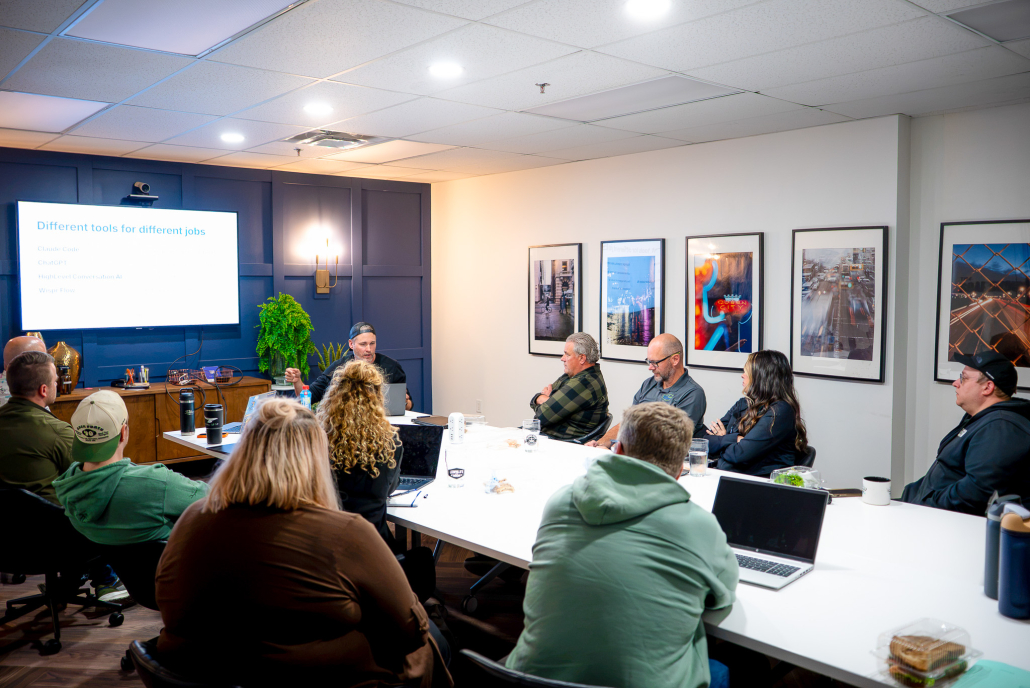
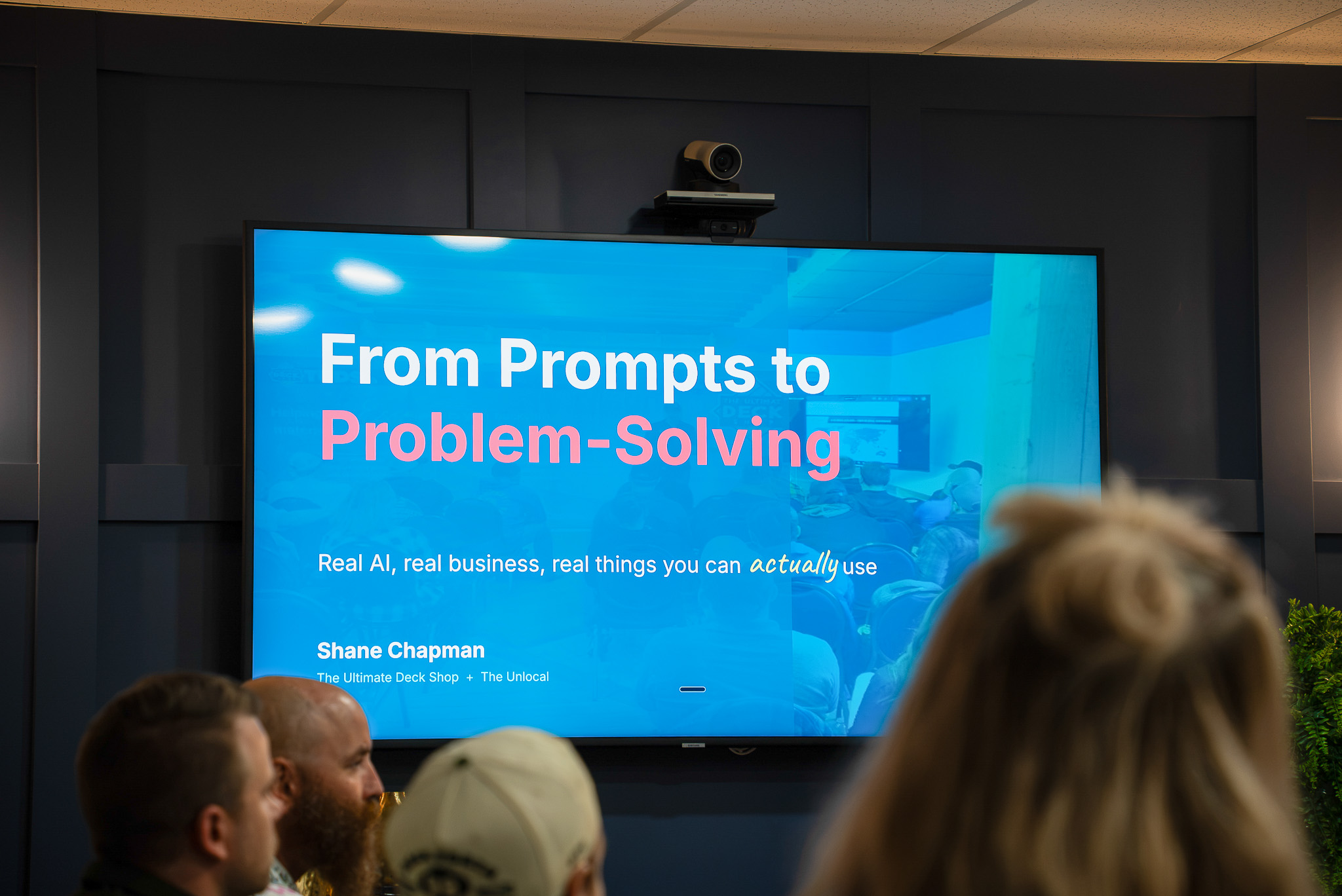
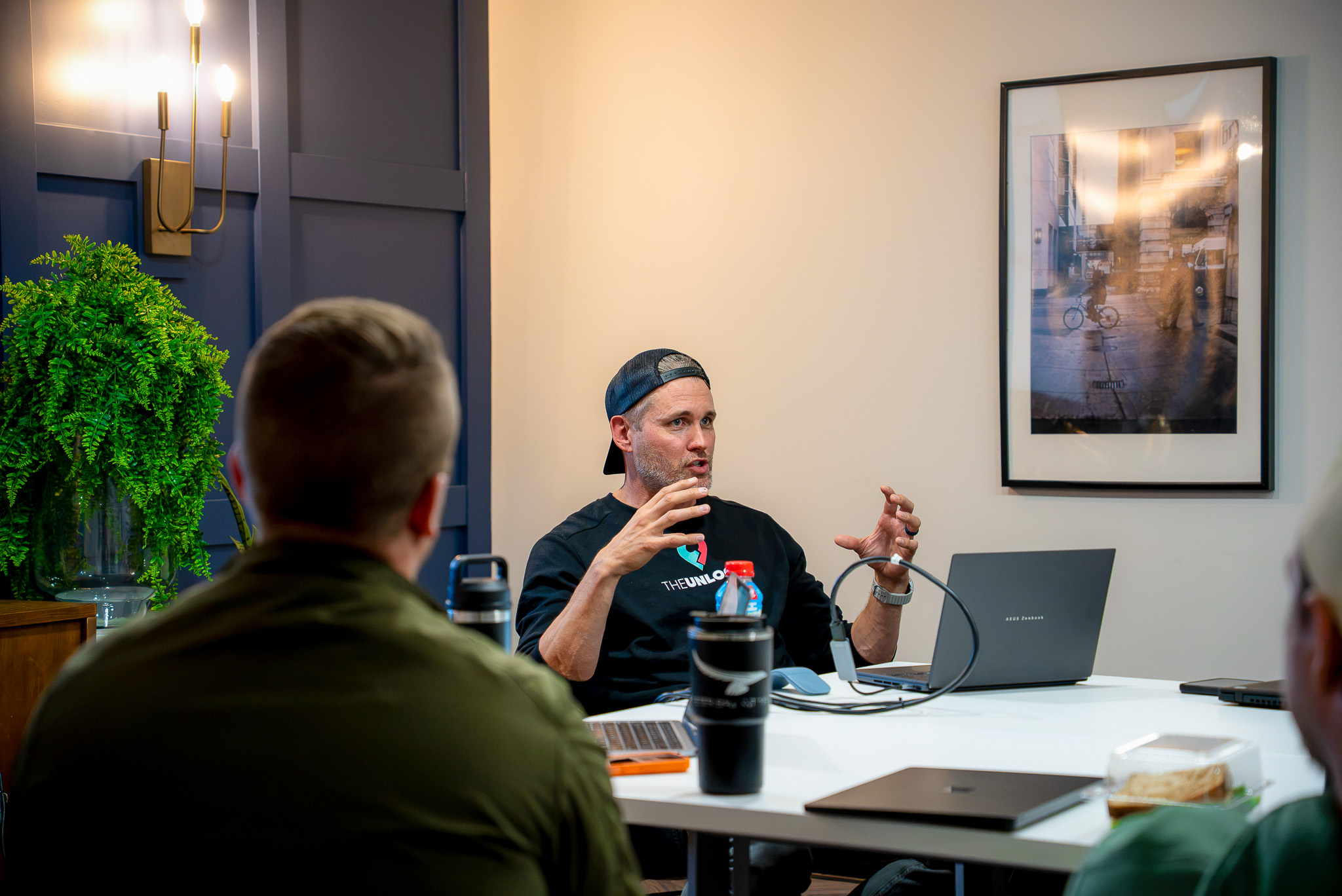
Our latest AI Power Hour with Shane Chapman: as usual, the best lessons weren’t about memorizing ten magical prompts. They were about curiosity.
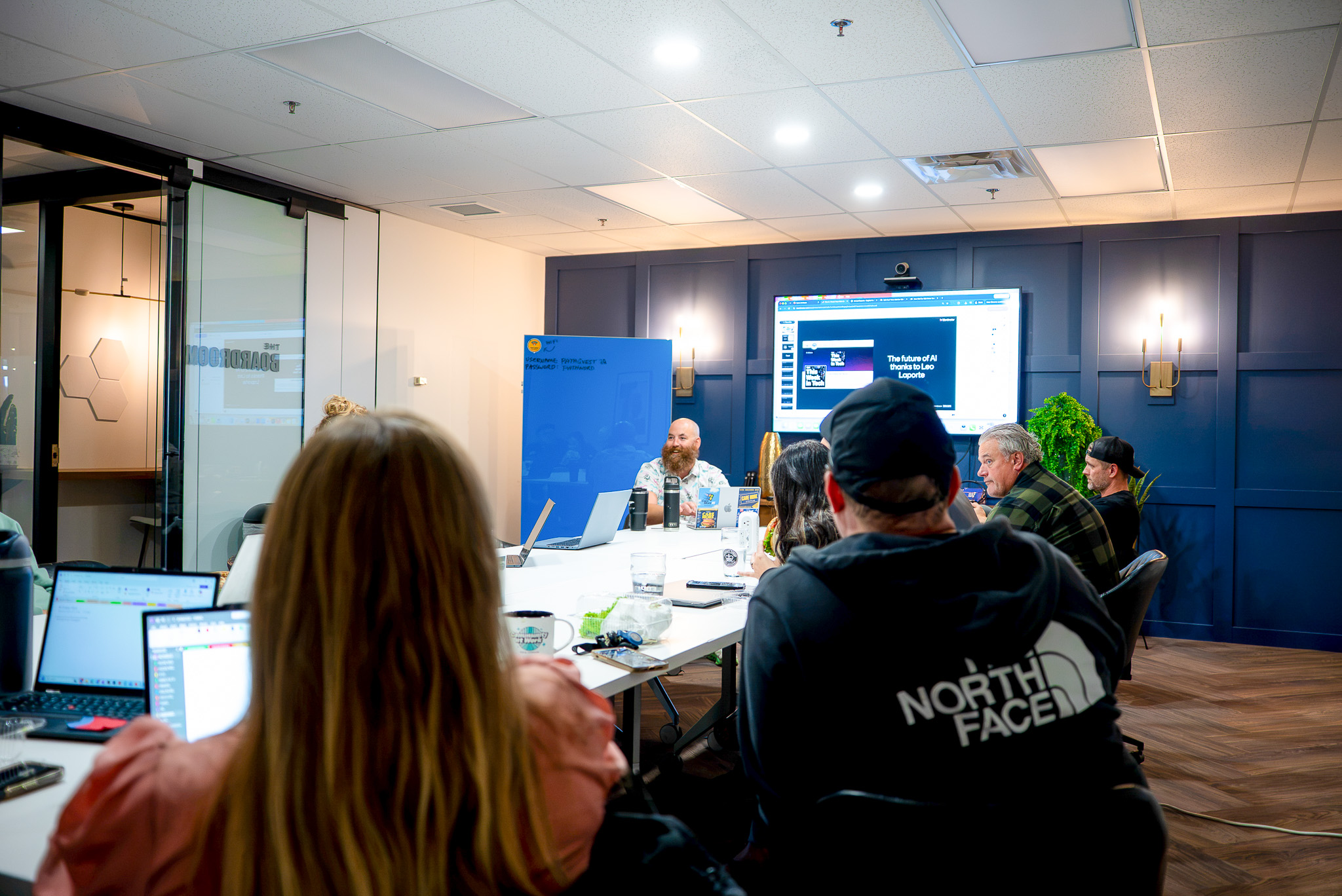
Shane showed us what happens when you stop treating AI like a fancy search engine and start asking a much more useful question:
Could AI make this easier?
That question took us in a few wonderfully practical, and occasionally weird, directions.
Build Software for Yourself
You no longer need to wait for someone to invent the exact piece of software you need.
Shane built a deck estimator because, in his words, estimating a deck is “just math.” He took knowledge he already had, explained the rules and turned it into a tool that could do the repetitive work for him.
He also built an AI bot for his website and used AI to troubleshoot his camper. The AI bot was pretty neat; he could go in and watch conversations happening, and don’t worry, there’s an option to ask to speak to a human. But when 80% of your phone calls or inquiries are asking your hours or if something is available in your inventory, AI can handle the vast majority of those requests.
None of these ideas started with, “I should use AI today.” They started with a real problem:
- This takes too long.
- I do this over and over.
- This is annoying.
- There has to be an easier way.
That might be the most useful way to approach AI. Don’t start with the tool. Start with the bottleneck.

Use the New Tools
AI changes quickly. Very quickly. The tool you tried six months ago may be far more capable today, or there may be another tool that’s better suited to the job.
The only way to understand what these tools can do is to actually use them. Give them a real spreadsheet. Ask one to help organize a long document. Upload the PDF you’ve been avoiding. Try building the tiny piece of software you wish already existed.
Try things. Break things. Laugh when the result is completely unhinged. Then try again.
You don’t learn AI by watching someone else use it. You learn by giving it a problem you genuinely care about.
Personalize the Tools
The default version of an AI tool is designed for everyone, which means it isn’t designed specifically for you.
Tell it how you work. Give it examples of your writing. Explain your business, your customers, your priorities and the words you never want it to use. Build a Custom GPT for a repeated task. Organize projects so you aren’t starting from zero every time.
The better the tool understands your context, the more useful it becomes.
AI shouldn’t erase your personality. Used properly, it should help more of your personality make it into the work.
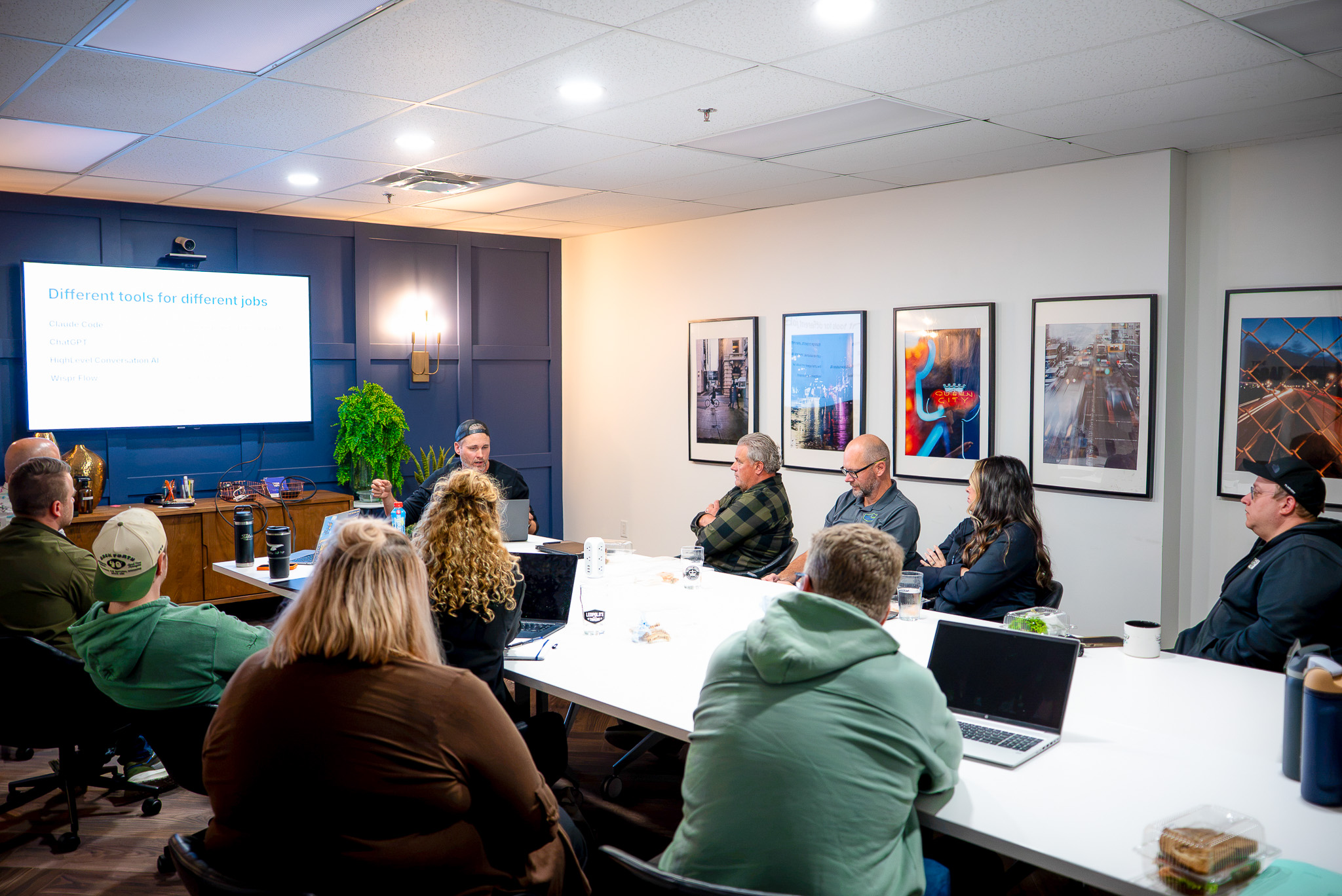
ChatGPT vs CoPilot vs Claude vs Gemini: which one is the BEST?
Whichever one you’re comfortable with. Each has its benefits, but to the average person, most of the mentioned AIs above will perform very well. Claude doesn’t do images but is better at Code. Copilot has access to the Microsoft suite, but it’s a watered-down version of ChatGPT (unverified claim!!).
In our office, we’re split between ChatGPT and Claude. Brandon uses Claude; Jeph uses Chat. It’s hard to say which one is “THE BEST”; that’s why we believe whichever one you use, personalize it, create internal rules, and fill out your settings under “personality” in Chat.
For larger coding projects, it does seem like Claude is the better choice; that’s where Shane built the Deck Estimator tool.

Yes, We Talked About AI Music Again
Of course we did. Want to make some for yourself? Check out Suno!
AI music is one of the strangest and most entertaining ways to see what happens when new technology collides with human creativity. It can imitate styles, mash together ideas that have no business being in the same room and produce something surprisingly good, or spectacularly terrible. But mostly good!
The interesting part isn’t that a computer can make music. The interesting part is what a curious human decides to make with it. Yes, you can make a folk rock song from the 80s about your 8-year-old. But you didn’t hear that from me!
The same is true for every AI tool. It’s not the tool that’s interesting; it’s what folks are doing with it.

The Real Lesson
The magic isn’t really the AI. It’s what curious people do with it.
Find the annoying thing. Find the bottleneck. Find the repetitive task nobody enjoys. Then ask if AI could make it easier.
Build something for yourself. Personalize it. Test it on a real problem. And above all, do what’s best for the customer.
Keep experimenting. Keep learning. Keep caring more.


